



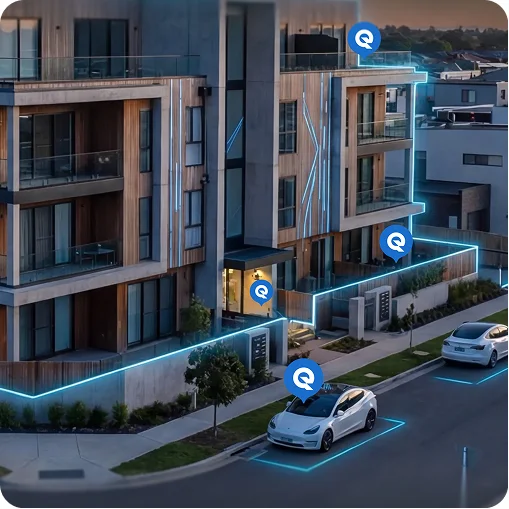





You manage multiple apartment communities. Every property has different internet providers, inconsistent service quality, and residents complaining about dead zones. Sound familiar? Managed Wi-Fi for multifamily portfolios solves this by centralizing connectivity under one provider, one contract, and one support system across your entire portfolio.
This guide helps property managers and asset owners evaluate whether portfolio-wide managed Wi-Fi makes sense for their buildings. You’ll get a cost comparison framework, vendor evaluation checklist, and implementation timeline. If you’re short on time, skip to the decision table in Section 2 to see if your portfolio qualifies for meaningful ROI.
Who this is for: Property managers overseeing 100+ units across multiple buildings, regional operators evaluating bulk apartment Wi-Fi agreements, and asset managers looking to increase NOI through amenity upgrades.
What you’ll walk away with: A clear yes/no framework, realistic cost expectations, and a 90-day implementation roadmap.
What Is Managed Wi-Fi for Multifamily Portfolios?
Managed Wi-Fi for multifamily portfolios is a bulk connectivity model where one provider delivers internet service across all properties in your portfolio. Unlike retail internet where each resident contracts individually, the property owner or manager controls the service agreement, network infrastructure, and resident experience.
The “managed” component means the provider handles equipment installation, network monitoring, troubleshooting, and upgrades. Your team doesn’t need IT expertise. The provider’s network operations center monitors performance 24/7 and dispatches technicians when issues arise.
How It Differs from Bulk Internet
Traditional bulk internet gives residents a connection but leaves network management to the property. Managed Wi-Fi goes further: the provider owns the routers, access points, and backend systems. They guarantee uptime SLAs, handle resident support calls, and push firmware updates automatically.
For portfolio operators, this distinction matters. Managing multiple ISPs across apartment portfolios requires dedicated staff or expensive MSP contracts. Managed Wi-Fi shifts that burden to specialists who do this at scale.
The Portfolio Advantage
Single-property deals rarely get preferred pricing. When you bundle 2,000+ units across multiple communities, providers compete aggressively. Portfolio agreements typically secure 15-25% lower per-unit costs compared to property-by-property negotiations. You also gain leverage for better SLAs, faster installation timelines, and dedicated account management.
According to the National Multifamily Housing Council, 92% of renters now consider internet quality a top-three amenity—ranking above fitness centers and pools. Portfolio-wide managed Wi-Fi lets you deliver consistent quality across all communities, strengthening your brand and resident retention.
Should Your Portfolio Switch? Decision Framework
Not every portfolio benefits equally from managed Wi-Fi. Use this framework to assess your situation before engaging vendors.
Quick Qualification Checklist
- Portfolio size: 500+ total units across 3+ properties (smaller portfolios rarely get meaningful volume discounts)
- Current fragmentation: 3+ different ISPs serving your portfolio (consolidation creates savings)
- Resident complaints: Internet appears in top 5 maintenance requests or survey complaints
- Building age: Properties built before 2015 often have inadequate wiring for modern speeds
- Lease structure: Ability to include internet in rent or as mandatory amenity fee
If you checked 3+ items, managed Wi-Fi likely makes financial sense. Fewer than 3? The switching costs may outweigh benefits.
When Managed Wi-Fi Doesn’t Work
Skip this model if your properties have long-term exclusive agreements with incumbent providers (common in buildings with provider-funded infrastructure). Also reconsider if your resident demographic skews toward seniors who may resist mandatory internet fees, or if local regulations prohibit bulk billing structures.
Cost Breakdown: What Portfolio Operators Actually Pay
Vendor proposals often obscure true costs. Here’s what to expect and where hidden expenses lurk.
Typical Cost Structure (Per Unit/Month)
- Base service fee: $55-85/unit for 500 Mbps symmetrical; $65-95/unit for gigabit
- Equipment lease: $8-12/unit (access points, switches, in-unit routers)
- Installation: $300-500/unit one-time (varies dramatically by building condition)
- Support tier: $7-12/unit for premium SLA with 4-hour response
For a 1,500-unit portfolio at mid-tier pricing, expect $65,000-85,000 monthly operating cost plus $300,000-500,000 upfront installation.
Revenue Offset Models
Most operators don’t absorb these costs. Three common approaches:
RUBS (Ratio Utility Billing): Include internet as utility and bill back to residents. Legal in most states but check local regulations. Typical pass-through: $50-75/unit.
Amenity fee: Mandatory monthly fee separate from rent. More transparent than RUBS. Residents see the charge but can’t opt out.
Rent premium: Roll cost into base rent during renewals. Less visible to residents but requires market-rate justification.
Operators using RUBS or amenity fees typically achieve 15-25% margin on internet services after covering provider costs. That’s $10-20/unit monthly contribution to NOI.
Hidden Costs to Negotiate
Watch for these line items that inflate total cost:
- Network assessment fees: $2,000-5,000 per property for site surveys (should be waived for portfolio deals)
- Permit and licensing: Provider may pass through municipal fees
- Riser and pathway construction: Older buildings need conduit work; get fixed-price quotes
- Early termination penalties: Standard is 50-100% of remaining contract value; negotiate caps
Vendor Selection: What to Require in Your RFP
Portfolio deals attract serious providers. Use that leverage to demand specifics most single-property operators can’t require.
Must-Have Contract Terms
SLA with teeth: Require 99.9% uptime guarantee with automatic credits. Calculate what 0.1% downtime means: roughly 8.7 hours annually. Credits should be meaningful—at least 10% of monthly fee per violation.
Speed guarantees: Advertised speeds mean nothing without minimums. Require 80% of advertised speed to 95% of units during peak hours (7-10 PM). Include testing methodology in the contract.
Scalability clause: Lock in per-unit pricing for future acquisitions. Good providers offer 12-24 month price protection for portfolio additions up to 50% growth.
Exit provisions: Standard contracts run 5-7 years. Negotiate buyout options at years 3 and 5 with declining penalties. Include performance-based termination rights if SLAs are missed repeatedly. Before signing any long-term agreement, review our guide on fiber internet contracts to understand key negotiation points.
Vendor Evaluation Scorecard
Rate each vendor 1-5 on these criteria:
- Portfolio experience (references from 1,000+ unit operators)
- Geographic coverage (can they serve all your markets?)
- Technology stack (fiber backbone vs. fixed wireless vs. hybrid)
- Support model (dedicated account team vs. general call center)
- Financial stability (check for recent funding, debt load, acquisition risk)
- Integration capabilities (property management software, smart building systems)
Require demos of their resident portal and management dashboard. If the interface looks dated, their infrastructure probably is too.
Red Flags in Vendor Proposals
Walk away if you see:
- Vague SLAs without specific metrics or credit structures
- Required equipment purchases (lease models protect you from obsolescence)
- Resistance to third-party speed testing provisions
- Exclusive marketing rights that limit your resident communications
Implementation: 90-Day Rollout Roadmap
Portfolio-wide deployment requires coordination across properties, staff, and residents. This timeline assumes contract signed and permits approved.
Days 1-30: Infrastructure Assessment
Provider conducts site surveys at each property. They’ll document existing wiring, identify riser locations, and flag buildings needing significant upgrades. Your role: provide building access, as-built drawings, and introduce on-site staff. Understanding your current multifamily internet infrastructure helps set realistic expectations for the assessment phase.
Deliverable: Property-by-property installation scope and timeline. Expect 2-4 properties to have complications requiring extended timelines or additional investment.
Days 31-60: Phased Installation
Start with your newest or best-wired properties. This builds provider familiarity with your portfolio and creates reference sites for resident communication. Install common area networks first, then unit-level equipment.
Critical task: Coordinate with existing ISPs on disconnect timing. Residents need overlap period – never leave units without service.
Days 61-90: Activation and Optimization
Bring residents online property-by-property. Provider handles individual unit activation; your team manages communication and complaint escalation. Expect 5-10% of residents to have issues requiring technician visits.
Post-activation: Run speed tests across sample units at each property. Document baseline performance for future SLA enforcement. Schedule 30-day review with provider to address any systematic issues.
Ongoing: Performance Monitoring
Require monthly performance reports showing uptime, average speeds, and support ticket volume by property. Track resident satisfaction through your standard survey process. Include internet-specific questions to measure improvement against pre-deployment baseline.
Your Next Steps
Managed Wi-Fi for multifamily portfolios delivers real value for operators with sufficient scale and the right building conditions. The economics work when you can consolidate fragmented provider relationships, pass costs to residents through structured billing, and negotiate portfolio-level pricing.
This week: Audit your current internet situation. Document which providers serve each property, what residents pay, and complaint frequency. This baseline data strengthens your negotiating position.
This month: Run the qualification checklist against your portfolio. If you meet 3+ criteria, issue RFPs to at least three providers. Use the evaluation scorecard to compare apples-to-apples.
This quarter: Select a provider and negotiate contract terms using the must-have list above. Don’t accept first offers—portfolio deals have significant margin for providers, giving you room to push on pricing and terms.
The operators who treat connectivity as strategic infrastructure—not just another utility – consistently outperform on resident satisfaction and retention. In 2026’s competitive rental market, that edge matters. For HOA-governed properties in your portfolio, review specific considerations for internet for HOAs to ensure board alignment.
References
- National Multifamily Housing Council – Industry research and resident preference data
- FCC Household Broadband Guide – Speed recommendations and consumer protection information