







At a condominium board meeting in Florida, a property manager laid out the latest resident feedback. The complaints weren’t about landscaping, parking or the gym; they were about the internet. Some owners paid nearly $90 a month for cable broadband, others were stuck with slow DSL, and everyone suffered dead zones in the clubhouse and pool area. When the discussion turned to next year’s budget, a question emerged: should the association continue letting residents choose their own providers, or should it negotiate a single, property‑wide contract to deliver high‑speed access to every unit? This decision between bulk internet and individual contracts has become one of the most consequential choices for multi‑dwelling units (MDUs), homeowners’ associations (HOAs) and other community operators.
Bulk internet refers to a collective agreement where the property contracts with an internet service provider (ISP) for the entire community, spreading the cost across rents or HOA dues. Individual contracts leave each household to manage its own installation, fees and equipment. In an era when high‑speed connectivity powers remote work, streaming, smart‑home devices and telehealth, understanding which model delivers better resident satisfaction and revenue is essential for modern property management.
Bulk Internet vs. Individual Contracts
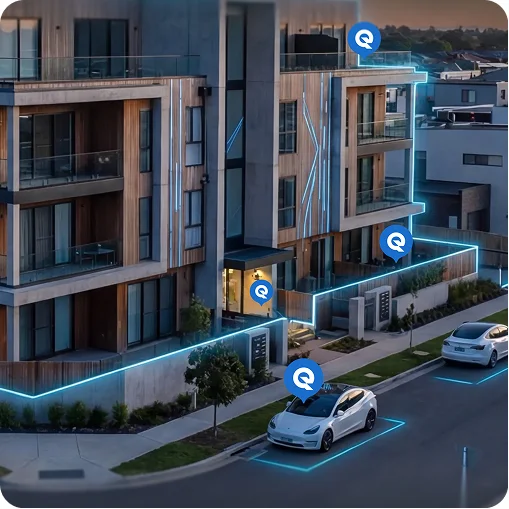
Bulk internet (sometimes called community‑wide Wi‑Fi or managed Wi‑Fi) is an agreement in which a property owner or HOA contracts with an internet service provider (ISP) to deliver connectivity to every unit and common area. Residents typically pay through rent or HOA dues rather than signing separate retail contracts. Individual contracts leave each household to set up service on their own, managing installation, equipment fees and credit checks.
Bulk agreements can take different forms – some deliver symmetrical fiber connections inside each unit, others provide community‑wide Wi‑Fi with enterprise‑grade access points. The common thread is that the property leverages its buying power to secure a better rate and experience for everyone. According to industry groups like the National Multifamily Housing Council (NMHC) and the National Apartment Association, these contracts let owners negotiate high‑speed internet rates that are up to 50 percent lower than standard retail pricing. By contrast, individual plans often cost $60–$90 per month and include installation and equipment fees.
Resident Expectations: Fast, Always-On Connectivity
High‑speed internet is no longer a luxury; it ranks alongside water and electricity. In the 2024 NMHC/Grace Hill Renter Preferences Survey, 90 percent of renters said they would not rent without high‑speed internet. More than 87 percent wanted service active the moment they moved in, and about half said a positive Wi‑Fi experience during a property tour would influence their leasing decision. This expectation stems from the realities of 2025: remote work, streaming in 4K, cloud gaming, online classes, smart‑home devices and telehealth all require robust connections.
Despite that demand, only about 16 percent of renters currently live in communities offering property‑wide managed Wi‑Fi. Yet consumer reliance on mobile and broadband services is nearly universal. Pew Research Center data show that 95 percent of U.S. adults use the internet, 90 percent own a smartphone and 80 percent subscribe to home broadband. Forty‑one percent report being online “almost constantly”. In other words, the vast majority of residents need more than a few hotspots in the lobby; they need reliable connectivity everywhere they live, work and socialize.
Why Bulk Internet Delivers Better Value
Locked‑In Cost Savings
When a community negotiates a bulk agreement, it harnesses collective buying power. The Bulk Broadband Alliance told the FCC that bulk billing offers internet prices at least 50 percent lower than comparable retail packages and avoids one‑time fees like installation or equipment rentals. Reuters reported that NMHC and NAA leaders praised the FCC’s decision to drop a proposed ban on bulk billing because the regulation “could have raised the price of internet service for Americans living in apartments by as much as 50 percent”1. An industry article aimed at HOA boards notes that bulk services allow communities to provide high‑speed internet, TV and phone at up to 50 percent less than homeowners would pay individually.
These savings aren’t limited to luxury properties. In affordable housing, bulk billing eliminates barriers like credit checks, deposits and promotional rates that disappear after a few months. EducationSuperHighway, a nonprofit focused on broadband access, argues that bulk agreements have been instrumental in bridging the digital divide by allowing housing providers to secure discounted rates for residents. Without them, providers may struggle to negotiate favorable terms, leading to higher costs and fewer options for low‑income residents.
Return on Investment and NOI Growth
Bulk internet isn’t just a perk; it’s a revenue strategy. Because the property purchases service at a wholesale rate, owners can add a modest technology fee or wrap the cost into rent and still undercut market rates. Multifamily & Affordable Housing Business reports that most landlords with managed Wi‑Fi charge roughly 50 percent less than retail pricing. Owners often add a markup to recoup network construction costs, yet the total price remains below what residents would pay individually. Some ISPs also share a portion of monthly service fees with the property, creating a direct revenue stream.
Developers are increasingly treating fiber connectivity as an amenity that boosts property values. Research by the Fiber Broadband Association found that homes with fiber connections sell for 4.9 percent more, condo values increase 3.2 percent and rents rise 12.8 percent compared with similar properties without fiber. Industry experts note that a bulk fiber agreement lets HOAs either pass along savings or package internet as a value‑added amenity, generating incremental revenue and higher net operating income (NOI) over time. As retail rates rise, the gap between the locked‑in bulk rate and market price widens, allowing communities to capture more value.
Operational Efficiency & Smart‑Building Capabilities
A single managed network simplifies operations for both residents and property teams. Instead of coordinating multiple providers and troubleshooting different routers, the owner oversees one system. This curb‑to‑couch approach means residents are connected immediately upon move‑in, eliminating installation appointments, deposits and equipment rentals. Because the network is engineered for the entire building, it reduces interference between units, balances bandwidth and provides consistent coverage in common areas.
Managed Wi‑Fi also powers the smart‑building features that residents increasingly expect. The same NMHC survey revealed that many renters prioritize smart‑home devices, access‑control systems and electric vehicle charging. Fiber‑backed networks support these technologies and allow owners to offer tiered upgrades. In one student‑housing case study, switching from retail internet to a managed Wi‑Fi network increased net promoter scores by around 30 points and, when poorly managed networks were replaced, led to 50‑point improvements. The deployment saw a 15 percent increase in usage from 2024 to 2025 while service tickets dropped by 13 percent – a testament to how reliable connectivity reduces complaints and support costs.
In senior living, managed Wi‑Fi not only entertains residents but enables telehealth, remote monitoring and efficient care. Broadband Communities notes that independent living communities are leading adoption of managed Wi‑Fi because it increases resident satisfaction and retention rates and boosts net operating income. The network allows caregivers to access electronic medical records anywhere in the facility, connect smart beds and monitoring devices, and reduce residents’ isolation by keeping them connected with loved ones. This is critical because broadband access has been called a “super social determinant of health” – without reliable internet, older adults are cut off from telehealth and social support.
Simplified Installation and Professional Deployment
Beyond enhancing daily life, bulk internet simplifies property management. When a community adopts a unified network, the wiring and access points are installed professionally at the outset, rather than piecemeal as each resident orders service. This curb‑to‑couch approach means residents move in to a ready‑made connection and property staff are freed from scheduling technicians or handling multiple service providers. Professional deployment also preserves the community’s aesthetics; there are no unsightly cables snaking across balconies or holes drilled into facades when individual subscribers hire different companies. By avoiding the clutter and interference that retail installations create, the property maintains its curb appeal and long‑term value. Managers oversee one contract and one support line instead of juggling many, reducing administrative burden and ensuring that network upgrades or repairs happen uniformly across the property.
Digital Inclusion and the Social Impact of Bulk Internet
Affordable and public housing communities face significant barriers to installing and managing broadband. EducationSuperHighway warns that eliminating bulk billing would “exacerbate disparities in digital access,” noting that programs like Charlotte’s AccessCharlotte provide free internet to thousands of households in affordable apartments through bulk agreements. They argue that bulk billing is instrumental in bridging the digital divide. Similarly, an opinion in Affordable Housing Finance observes that Wi‑Fi installation is capital‑ and labor‑intensive and that many affordable properties have legacy contracts preventing them from negotiating better service. By leveraging collective buying power, bulk and managed Wi‑Fi allow these buildings to upgrade to higher‑quality internet without prohibitive cost.
These arrangements also support health and social services. Telehealth appointments, online medical records and video visits are now essential for older adults and residents with limited mobility. Without bulk agreements, many communities would struggle to fund the infrastructure needed to deliver those services. Managed Wi‑Fi ensures that residents can access telehealth anywhere on the property, and caregivers can use tablets and smart devices throughout the facility.

HOA‑Specific Advantages: Happy Residents and Stronger Communities
HOAs and condo associations often worry that bulk internet might feel like a top‑down decision. Yet communities that embrace it report happier residents and healthier budgets. An HOA‑focused article notes that bulk services let communities provide high‑speed internet and TV at up to 50 percent less than individual plans, while using the savings to reinvest in amenities or reserve funds. Contracts often include community‑specific service‑level guarantees and a dedicated account manager, which means fewer complaints and a single point of accountability. Offering discounted fiber internet as a standard amenity also adds curb appeal for home sales.
HOAs can choose different financial models: they can pass savings directly to homeowners or package fiber as a value‑added amenity to generate profit. Because installation costs are typically borne by the provider, communities avoid large capital expenditures. Over time, as market rates rise, the locked‑in bulk rate allows associations to project revenue and NOI growth.
Connectivity Is the Utility That Defines Modern Living
The evidence from surveys, industry research and real‑world deployments points overwhelmingly to one conclusion: bulk internet and managed Wi‑Fi deliver superior resident satisfaction, stronger revenue and greater digital equity than individual contracts. Renters expect fast, seamless connectivity everywhere; 90 percent will walk away without it. Bulk agreements leverage collective buying power to cut costs by up to 50 percent while allowing owners and HOAs to generate incremental revenue and enhance property values. Managed networks improve operational efficiency, support smart‑home technology and provide the reliability needed for remote work, telehealth and streaming.
Perhaps most importantly, bulk internet helps close the digital divide. Affordable and senior housing communities rely on bulk arrangements to negotiate affordable rates and deliver telehealth, online learning and social connection to residents. Eliminating these agreements would risk higher costs and reduced access for those who need connectivity the most. As communities design the next generation of multi‑dwelling units, student housing, senior living and HOAs, they should treat high‑speed internet not as an optional amenity but as the foundation of modern living. Bulk internet is the model that makes that foundation strong.
Sources:
- Public Knowledge (2023) – Analysis of broadband billing that explains typical individual‑plan costs and advocates for opt‑out options when bulk agreements are in place
- NMHC/Grace Hill Renter Preferences Survey 2024 – Survey findings showing that 90 percent of renters wouldn’t rent without high‑speed internet, 87 percent expect service active at move‑in and only 16 percent currently have property‑wide managed Wi‑Fi
- Bulk Broadband Alliance (2024) – Letter to the FCC asserting that bulk agreements can offer internet prices at least 50 percent lower than retail and avoid one‑time installation fees
- EducationSuperHighway (2023) – Commentary on digital inclusion explaining that bulk billing helps bridge the digital divide through programs like AccessCharlotte and cautions against eliminating bulk agreements
- Fiber Broadband Association (2024) – Research finding that fiber connectivity raises home sale prices by 4.9 percent, increases condo values by 3.2 percent and boosts rents by 12.8 percent
- Affordable Housing Finance (2023) – Opinion piece describing broadband as a “super social determinant of health,” highlighting barriers affordable properties face when upgrading and explaining how bulk agreements help provide telehealth and digital services