

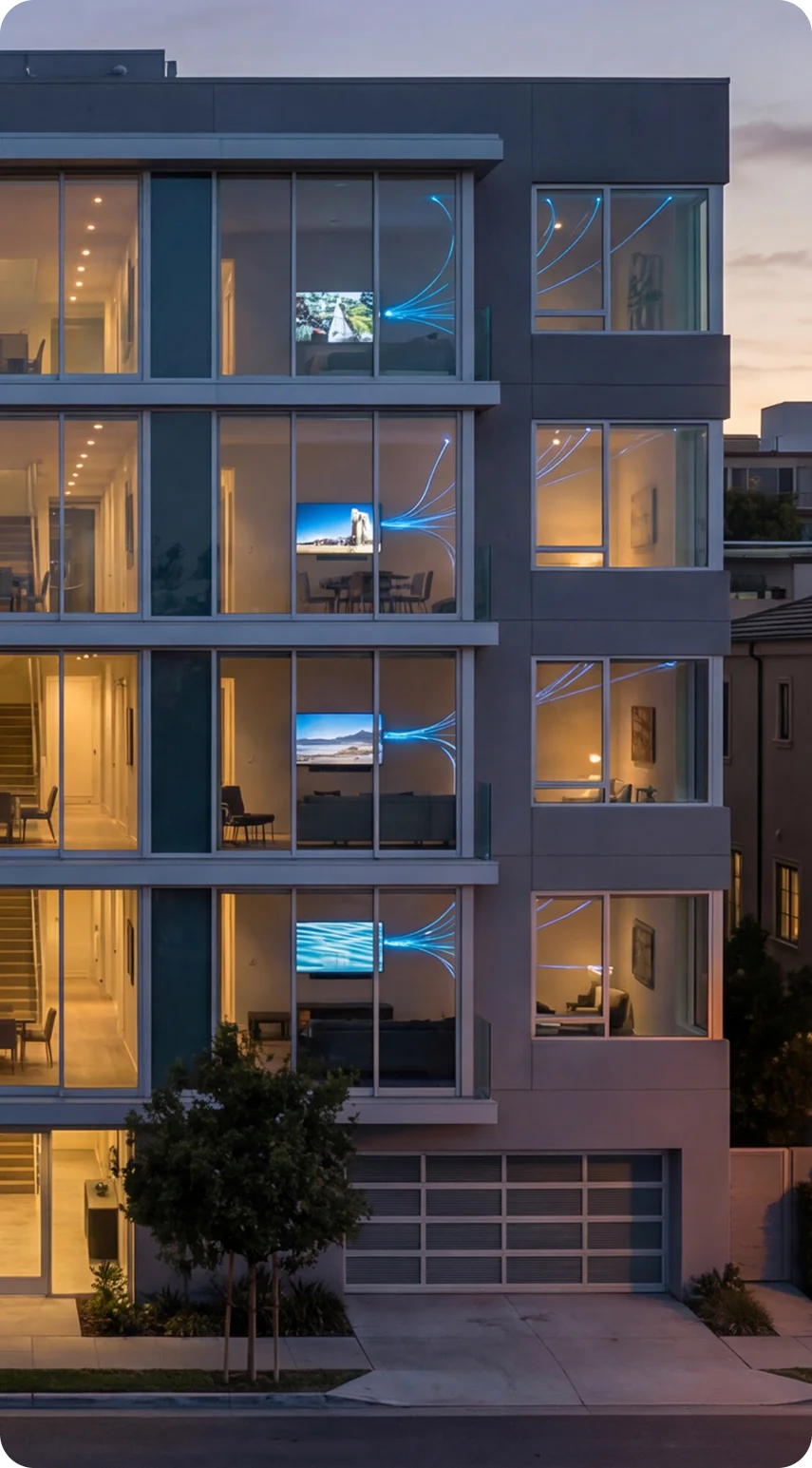


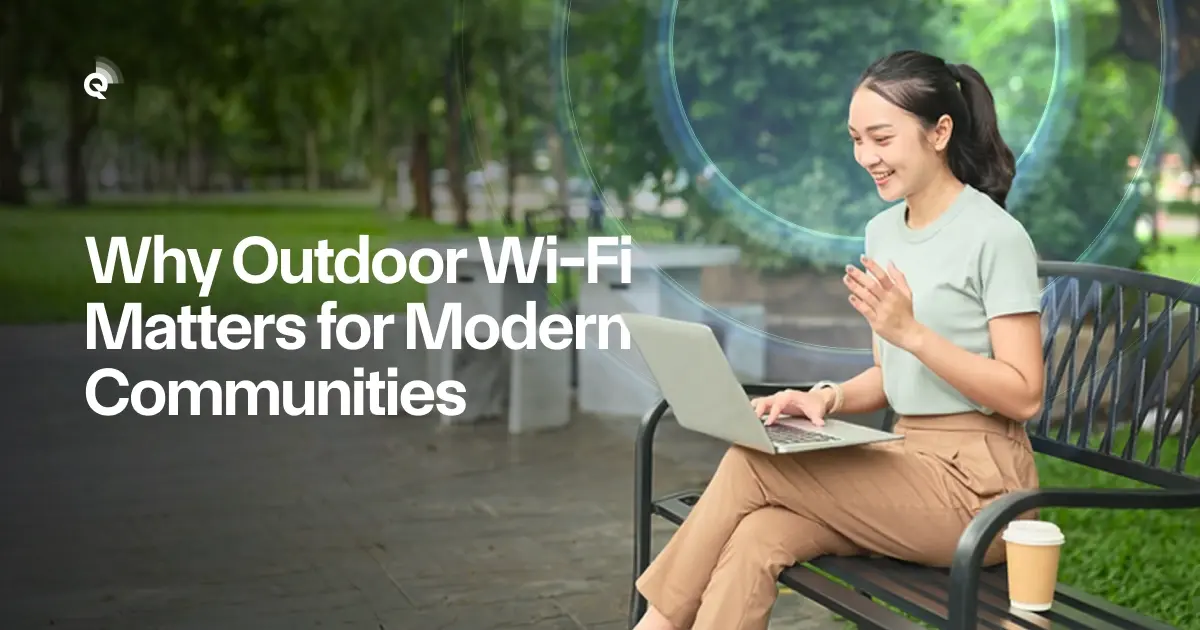
In most communities, “internet” is still treated as something that lives inside the unit. If the modem is online and the living room Wi-Fi works, the job feels done.
But residents don’t live only in their living rooms anymore.
They take video calls from patios and lanais. They stream music at the pool. They scroll social feeds while walking the dog. Kids watch YouTube near the playground. Smart cameras, gates, EV chargers, and access systems quietly depend on a stable connection in the background.
That’s where outdoor Wi-Fi systems come in. They extend your managed Wi-Fi and bulk internet strategy out of the unit and into the spaces that define life in a modern MDU or HOA. For communities already investing in managed Wi-Fi, MDU internet, or bulk Wi-Fi, outdoor coverage is the layer that makes the experience feel truly seamless.
Why Outdoor Wi-Fi Matters for MDUs and HOAs
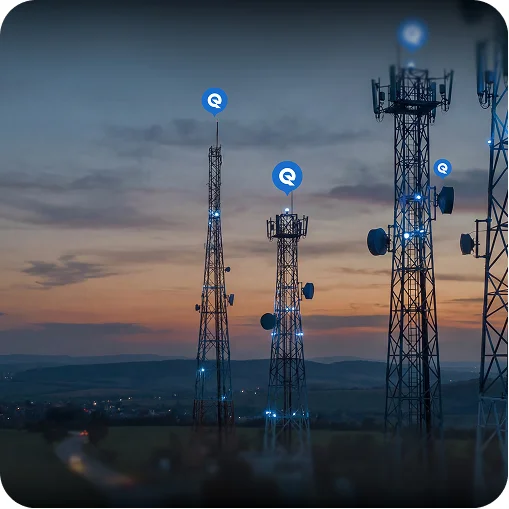
Many communities sit in spots where cellular coverage is unreliable: hilly terrain, tree cover, dense construction, or simply being on the edge of a carrier’s footprint. Residents experience dropped calls at the gate, choppy Wi-Fi calling in the garage, or buffering on the pool deck. Even in suburban areas, buildings themselves can block mobile signal.
At the same time, the demand for reliable MDU internet has never been higher. Residents expect to stay connected when they leave their front door, whether they’re:
- Uploading work files from a quiet outdoor table
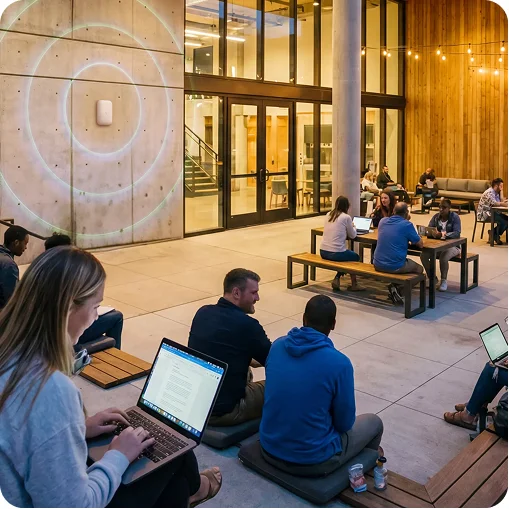
- Joining a video call from the clubhouse patio
- Streaming a game by the pool
- Using smart locks, cameras, or package systems that sit outside the unit
If your community only invests in indoor Wi-Fi, you’re covering part of the story. Outdoor Wi-Fi fills in the gaps and turns your bulk internet agreement into property-wide coverage, not just a collection of indoor networks. Solutions from leading MDU providers now explicitly include indoor and outdoor coverage as part of one managed design, because that’s what it takes to deliver a consistent experience.
What Is an Outdoor Managed Wi-Fi System?
An outdoor Wi-Fi system is simply the outside layer of a managed Wi-Fi network, designed for courtyards, walkways, parking areas, pool decks, parks, and other shared spaces.
Under the hood, it usually includes:
- Weather-hardened outdoor access points (APs) mounted on walls, poles, or under eaves
- Directional or omni antennas tuned for coverage where people actually stand and sit
- PoE (Power over Ethernet) cabling back to switches in low-voltage or IDF rooms
- Optional mesh links to reach hard-to-wire locations while still being centrally managed
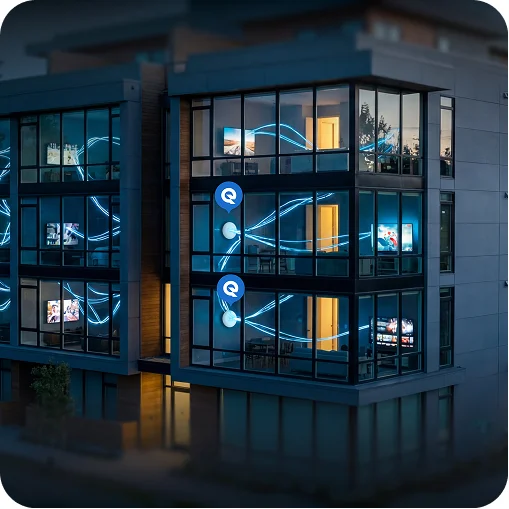
From the resident’s perspective, it all looks simple. They see the same SSID they use at home, their devices roam automatically between indoor and outdoor APs, and their experience feels like one continuous managed Wi-Fi network.
For the board or asset owner, the key is that outdoor Wi-Fi isn’t a separate “nice-to-have” add-on. It’s designed and monitored as part of your MDU internet and bulk Wi-Fi agreement. One provider, one architecture, one standard across the entire property.
How Outdoor Wi-Fi Fits into a Bulk Internet Model
In a retail model where every resident picks their own ISP, there is no such thing as “community outdoor Wi-Fi.” At best, you might see a single consumer router trying to cover a clubhouse or pool. It works on good days and fails on busy ones.
With bulk internet for HOAs and MDUs, the picture is different:
- The community buys internet and Wi-Fi as one shared service.
- The provider designs a full property-wide Wi-Fi network, including outdoor zones.
- Common areas, amenities, and building systems ride on the same managed backbone as the units.
In that model, outdoor Wi-Fi becomes a natural extension of your bulk agreement. The same fiber backhaul and core routing that feed in-unit speeds also power:
- Pool, gym, and clubhouse Wi-Fi
- Gatehouse and entry systems
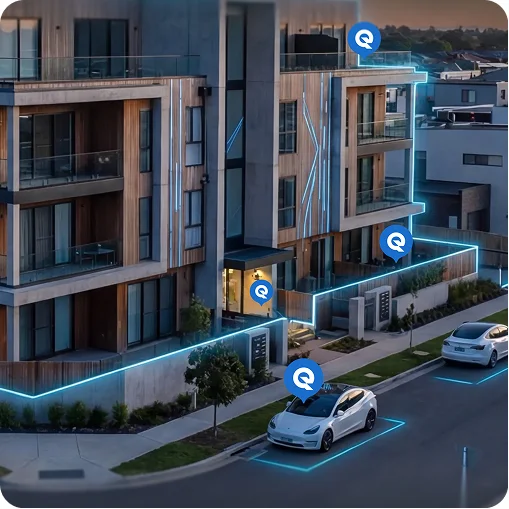
- Security cameras and access control
- EV charging stations and smart parking
Instead of each of these being a separate, fragile connection, they share one engineered MDU Wi-Fi design that’s monitored and supported 24/7.
Key Benefits of Outdoor Wi-Fi for Residents
Outdoor Wi-Fi doesn’t just look good on a brochure. It shows up in very practical ways residents notice:
Stronger, more consistent signal where people actually gather
No more “Wi-Fi is great in the kitchen but useless on the balcony.” Outdoor APs are placed where residents spend time, so signal strength stays high even at the pool, dog park, or outdoor lounge. In multifamily environments, this helps avoid congestion and roaming issues that plague consumer-grade setups.
Better experience for Wi-Fi calling and streaming
As more people rely on Wi-Fi calling and cloud apps, poor outdoor coverage becomes a real friction point. A well-designed outdoor layer keeps calls from dropping as people move between unit, hallway, and courtyard, and allows smooth streaming and browsing across the property.
Room for all the devices, not just laptops and phones
Outdoor Wi-Fi also supports IoT devices: cameras, access systems, sensors, irrigation controllers, and more. In a managed Wi-Fi design, these devices can live on their own VLANs so they don’t compete directly with resident traffic but still benefit from the same coverage footprint.
A more premium feel for the community
When residents can reliably work from the clubhouse, stream from the pool, or relax outdoors without losing their connection, the property feels more like a modern, connected community and less like a collection of isolated units.
Why Outdoor Wi-Fi Is a Win for Boards and Owners
Beyond resident satisfaction, outdoor Wi-Fi inside a managed MDU internet framework solves several long-term problems for boards and owners.
One network to support community systems
Gate controllers, security cameras, license-plate readers, EV chargers, and building automation systems all need reliable connectivity. Tying them into the same managed Wi-Fi and bulk internet backbone simplifies deployments and support. Instead of juggling multiple vendors and ad-hoc connections, you have one accountable network.
Cleaner infrastructure and fewer vendor conflicts
When outdoor connectivity is part of a single managed design, your low-voltage rooms, pedestals, and conduit runs stay organized. You’re not letting multiple ISPs run their own outdoor cabling and boxes in parallel. That means fewer failure points and fewer “your provider vs. their provider” arguments when something breaks.
Stronger amenity story for sales and leasing
Outdoor Wi-Fi makes your bulk Wi-Fi agreement far more marketable. “High-speed internet included” sounds good. “High-speed internet included, with seamless Wi-Fi from the unit to the gym, clubhouse, and pool” sounds better. As residents increasingly check connectivity before they sign, this difference matters.
Better use of a fixed bulk investment
If you’re already committing to bulk internet for the HOA or MDU, outdoor coverage helps you get full value out of that bandwidth. Instead of confining the benefit to four walls, you spread it across every shared space your residents use.

Designing Outdoor Wi-Fi the Right Way
Outdoor Wi-Fi in MDUs and HOAs works best when it’s treated like part of your managed Wi-Fi architecture, not a side project.
A solid design typically includes:
Site survey and heatmaps
Engineers model how radio signals behave around buildings, trees, and landscape features. This avoids the guesswork that leads to dead zones and interference.
Purpose-built outdoor hardware
Outdoor APs and enclosures are weather-rated, support modern standards like Wi-Fi 6/6E/7, and are designed for wall or pole mounting. Rugged form factors and PoE support make them ideal for long-term community deployments.
Smart placement and channel planning
Access points are placed to create overlapping coverage without too much channel overlap, so residents can roam without drops and the network can handle busy periods gracefully.
Security and segmentation
Outdoor networks need the same level of protection as indoor ones: WPA2/WPA3 encryption, strong authentication, and traffic segmentation for resident, guest, and IoT networks. In a managed MDU setup, these pieces are controlled centrally and enforced across every AP.
Outdoor Wi-Fi and the Future of MDU Internet
The line between “inside” and “outside” connectivity is disappearing.
Residents expect bulk internet and managed Wi-Fi to extend naturally into every part of the property. Smart locks, cameras, EV charging, and sensors are moving outdoors. And for many people, the best “home office” is actually a shaded table near the clubhouse or pool.
Communities that only think about bandwidth at the unit level will keep running into complaints and design limits. Communities that see outdoor Wi-Fi systems as a built-in part of their MDU internet and bulk Wi-Fi strategy will offer a noticeably better experience:
- Stronger, more consistent coverage across the entire property
- Cleaner, more reliable connectivity for common-area systems
- A more compelling amenity story for buyers, renters, and boards
As managed Wi-Fi becomes the standard for apartments, condos, and HOAs across the U.S., outdoor coverage is the next logical step. It’s how you make the promise of “community-wide Wi-Fi” real, not just a line in the brochure.