
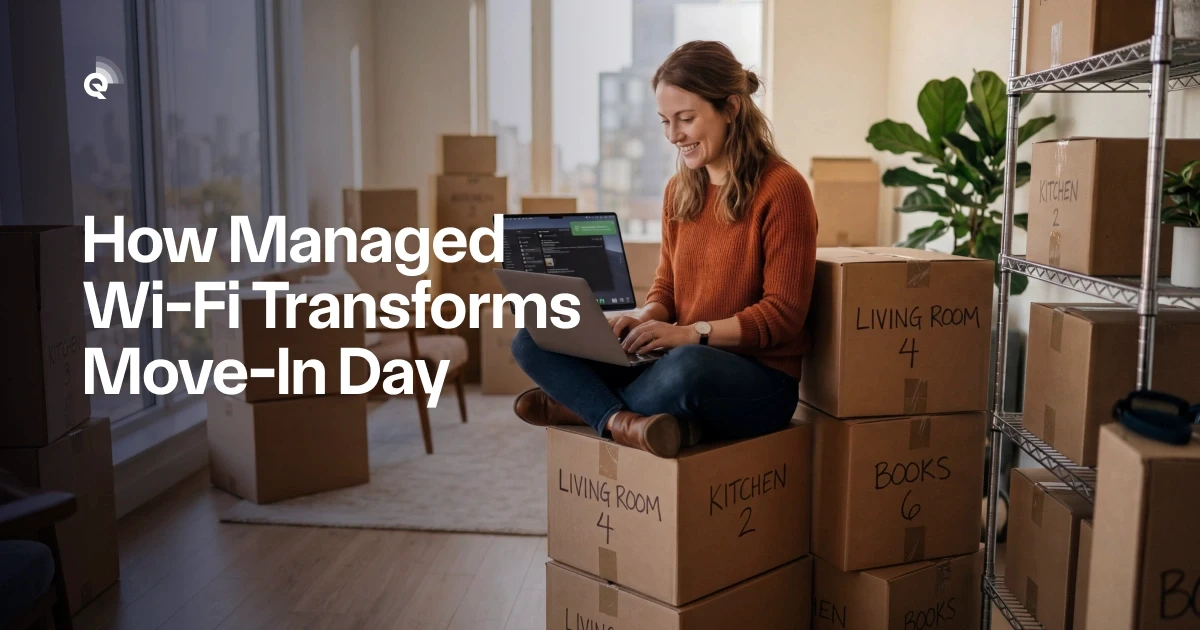
Why Internet is an Essential Utility for Renters
In the last two decades internet access has gone from luxury to necessity. Research shows that 96 % of U.S. adults use the internet, and roughly three‑quarters subscribe to a broadband service at home. The near‑universal adoption of broadband means connectivity is now viewed in the same category as electricity and water, a utility people expect to be available on demand.
The expectation is particularly acute among renters. A 2024 survey of renters found that 90 % are either interested in or unwilling to rent without high‑speed internet, and 86 % view reliable cellular service as essential. More than half of respondents work remotely, and almost 70 % of those remote workers do so daily or several days a week. Consequently, connectivity is not only about streaming movies or gaming, it is a prerequisite for employment, education and communication. In the same survey, 87 % said immediate service at move‑in is very important or essential, and 61 % of remote workers called it absolutely essential.
With internet now considered a vital utility, the process of turning it on should be seamless. Unfortunately, traditional installation models still rely on manual provisioning, scheduling and technician visits – a system designed for a different era.
The Traditional Internet Installation Model and Its Friction
Historically, a resident moving into an apartment had to choose a provider, schedule an installation appointment, and wait for a technician to visit the unit. Technicians would install or activate a modem, run coaxial or fiber cable to the apartment and register the account. This process created multiple friction points:
-
Installation windows and scheduling delays. Renters often must wait days for the next available appointment, then block off a four‑hour window for a technician to arrive. Residents who work remotely or have limited availability find this disruptive. Property managers often coordinate access if the resident is not yet present.
-
Truck rolls and labour costs. Sending a technician (“truck roll”) to each unit is expensive. Industry analysts estimate a truck roll costs between US $150 and $600, and the Technology Service Industry Association reports some visits exceed $1,000. Costs include labour, vehicle expenses and the hidden costs of missed appointments or return visits. Each truck roll also contributes to carbon emissions and traffic congestion.
-
Administrative coordination. Property staff must track service providers, grant access to secure areas, and ensure new residents have connectivity before move‑in. When multiple providers serve a building, this becomes a logistical tangle.
These pain points were tolerable when broadband adoption was limited. But with nearly everyone using the internet and many people working remotely, waiting days for a technician is no longer acceptable. The demand for day‑one connectivity, or simply put, the internet being ready the moment a resident moves in, is reshaping how broadband infrastructure is designed.
What is Managed Network Infrastructure in Multifamily Housing?
A new model is emerging in multifamily housing: managed network infrastructure. Instead of each unit containing a standalone modem and separately provisioned service, a property installs a centralized fiber backbone and enterprise‑grade wireless access points that deliver a property‑wide network. Residents connect to their own secure, private network upon move‑in, often via an app or digital portal. Key characteristics include:
-
Internet service pre‑provisioned across the property. Building‑wide networks ensure every unit already has connectivity. Residents simply authenticate and activate their private network, much like checking into a hotel. Industry descriptions of managed Wi‑Fi emphasize that the provider installs and monitors a property‑wide network so residents can connect immediately on move‑in without scheduling appointments or juggling multiple accounts.
-
Automated onboarding integrated with property management systems. Some platforms integrate with property management software to automate service delivery and upgrades. These systems are designed to eliminate truck rolls by enabling self‑service activation and remote management.
-
Enterprise‑grade equipment and personal networks. Managed networks use professional routers and switches with dedicated access points in each unit. Industry sources note that these access points provide stable coverage, and that central management reduces operational costs while ensuring consistent quality of service. About 58 % of renters consider having a secure personal network within a managed Wi‑Fi system very important or absolutely essential.
-
Digital activation and private networks. Some service providers offer connected building solutions where residents download an app to activate their service digitally; the building’s network can continue to broadcast separate networks for IoT devices and common amenities. Residents receive a private in‑unit network while the building network supports smart locks, thermostats and amenity Wi‑Fi.
-
Zero‑touch provisioning. Modern systems rely on automation for configuration and updates. OpenWiFi and similar approaches enable “zero‑touch” provisioning, reducing deployment time and enabling remote management.
Providers often market this approach as “instant activation” or “Wi‑Fi ready apartments.” The concept goes beyond marketing: it re‑architects connectivity so that internet is as plug‑and‑play as electricity. At Quantum Wi‑Fi, we design networks for multifamily properties that integrate fiber backbones, enterprise‑grade access points and software for digital onboarding. Our approach aims to deliver internet and Wi‑Fi as an amenity, enabling residents to activate service in minutes rather than waiting days. Many other providers are adopting similar models as demand for day‑one connectivity grows.
Operational Benefits of Managed Wi-Fi for Property Managers
Managed network infrastructure doesn’t just improve resident satisfaction; it also streamlines property operations. Surveys show pre‑installed Wi‑Fi is important to 70 % of renters, and about 67 % express interest in pre‑installed or community‑wide Wi‑Fi. By offering these services, properties stand out in a competitive market. Beyond marketing, the operational benefits include:
-
Elimination of technician scheduling. Because the network is installed and managed centrally, there is no need to coordinate truck rolls for each unit. One example platform highlights that automation and self‑service upgrades eliminate onsite visits, freeing property staff from coordinating with multiple service providers.
-
Reduced costs and carbon footprint. Reducing truck rolls saves labour and transportation costs. Analysts estimate a single truck roll costs between US $150 and $600 and can exceed $1,000. Eliminating hundreds of visits across a portfolio therefore yields significant savings and reduces environmental impact.
-
Unified infrastructure for smart building operations. Modern properties deploy a growing number of IoT devices, such as smart thermostats, building access systems, electric vehicle chargers and environmental sensors. Industry discussions emphasize that a centralized managed Wi‑Fi network can serve as the backbone for proptech, reducing fragmentation and supporting automation. A unified network improves device uptime and provides real‑time data for maintenance and analytics.
-
Lower maintenance and scalable service. Consolidating network infrastructure reduces redundancy and lowers maintenance costs. Sources note that managed Wi‑Fi eliminates the expense of multiple service contracts and equipment, allowing bandwidth to be allocated dynamically as demand changes. Because the system is centrally managed, software updates and security patches are applied across the property without onsite visits.
For property managers, the shift to managed networks means less time spent on connectivity problems and more time focused on leasing, resident experience and building operations. It also simplifies scaling across a portfolio: once the network architecture and onboarding process are standardized, they can be replicated in multiple communities with minimal variation.
Enhancing the Resident Experience with Day-One Connectivity
From the resident’s perspective, moving into a new apartment is a whirlwind of logistics: signing leases, arranging furniture and transferring utilities. Internet should not be another obstacle. Traditional installations require calling providers, waiting days and possibly taking time off work to meet a technician. NMHC’s survey found that 87 % of renters view having internet available on move‑in as very important or essential, and for remote workers, 61 % say it is absolutely essential. When connectivity isn’t ready, residents may resort to mobile hotspots or working from coffee shops, adding stress to an already hectic period.
With managed networks, the experience changes dramatically:
-
Day‑one internet access. Residents receive credentials or a QR code during lease signing or move‑in. Logging in immediately connects them to their private network with no appointments. Some service providers describe how this system allows residents to connect instantly without waiting for installation.
-
Reliable coverage across the property. Unlike consumer‑grade routers that may leave dead zones, enterprise access points provide consistent coverage in every unit and common area. Industry literature notes that dedicated access points in each unit and professional switches ensure stable performance and 24/7 remote support.
-
Secure personal networks. Each resident has a separate virtual network for their devices, preventing others from accessing their data. 58 % of renters say having such a secure personal network is very important or essential.
-
Simplified onboarding and account management. Activation is typically handled through a web portal or mobile app integrated with the property management system. Residents can upgrade speeds or add devices without waiting on hold, and support teams can troubleshoot remotely.
-
Community amenities. Many managed networks provide separate networks for common areas. Remote workers appreciate free Wi‑Fi in shared spaces, some 92 % of those who use shared workspaces consider it an important or essential amenity. Because the entire property is networked, adding coworking lounges or outdoor connectivity becomes straightforward.
Immediate internet access helps residents feel at home from day one. They can unpack while streaming music, set up smart thermostats and locks, and connect to remote work without interruption. With remote work becoming the norm for many (52 % of NMHC survey respondents work remotely), connectivity influences how quickly residents can settle into new routines.
The Technologies Behind Seamless Wi-Fi Activation
Managed network infrastructure relies on several building blocks, but the underlying concepts can be explained without jargon:
-
Fiber backbone. A high‑capacity fiber optic cable runs from the street into the building’s main equipment room. From there, the fiber network is distributed to each floor or unit. Fiber’s huge bandwidth ensures the network can handle current demands, which continue to grow. For example, the average U.S. household usage reached 664 GB per month in mid‑2025) and future‑proof the property.
-
Enterprise access points. Rather than consumer routers, professional‑grade wireless access points are installed in each unit or hallway. These devices are connected to centralized switches and can broadcast multiple networks (e.g., private resident networks, IoT networks and guest Wi‑Fi) simultaneously. Enterprise gear supports more devices and offers stronger security than typical home routers.
-
Centralized management software. Network hardware is monitored and controlled via cloud‑based platforms. This software automatically provisions new residents, sets up VLANs (virtual networks), and enforces security policies. Zero‑touch provisioning allows devices to be installed and configured without manual intervention. Providers can push updates and troubleshoot remotely, reducing the need for on‑site visits.
-
Integration with property management systems. Platforms that integrate with leasing systems can trigger the creation of a personal network and credentials when a lease is signed. When residents move out, their network is deactivated automatically, protecting security and freeing resources.
-
Network segmentation for IoT. Modern buildings rely on smart locks, thermostats, cameras and environmental sensors. Managed networks can allocate bandwidth and security rules to these devices separately from resident traffic. This segmentation protects privacy and ensures that building systems remain online even if a resident’s devices cause issues.
Because these components work together, the network can deliver consistent performance and reliability. Residents experience a personal network as easy to use as consumer Wi‑Fi, while property managers gain enterprise‑level visibility and control. At Quantum Wi‑Fi, we package these technologies into turnkey solutions specifically for multifamily housing, highlighting integration, privacy and performance rather than technical details. Many other providers offer comparable options.
Looking Ahead: The Future of the Move-In Experience
As remote work, streaming and connected devices continue to drive bandwidth demands, more properties will adopt managed network infrastructure. The OpenVault report highlighted that average broadband usage jumped by roughly 71 GB per month within a year, representing over 9.4 billion additional gigabytes across U.S. broadband subscribers. Such growth makes it impractical for each resident to bring their own modems and routers; building‑wide networks with scalable backbones are better suited to absorb rising demand.
The NMHC survey suggests that residents increasingly view connectivity as a determinant of where to live: pre‑installed Wi‑Fi and community‑wide internet rank high among desired amenities. Younger renters in particular expect digital‑first experiences, from self‑guided tours to online leasing and smart home control. Seamless activation aligns with these expectations by making connectivity immediate and invisible.
For owners and managers, investing in managed connectivity is no longer a luxury but a competitive necessity. Properties offering day‑one internet can command higher satisfaction and retention, reduce operational headaches and future‑proof their buildings. As standards like Wi‑Fi 7, 10 Gigabit fiber and Edge computing become mainstream, centralized infrastructure will enable easy upgrades without rewiring each unit.
The end of installation windows represents a broader shift toward user‑centric real estate. Residents want frictionless experiences, and owners want efficient operations. By rethinking broadband as shared infrastructure managed by professionals, properties can deliver both. Instead of waiting for a technician, renters simply unpack, connect and enjoy their new home – a small but meaningful improvement that signals a smarter, more connected future.
Sources
-
Pew Research Center, “Internet, Broadband Fact Sheet” (2025) – statistics on internet use and broadband adoption.
-
NMHC & Grace Hill, “2024 Renter Preferences Survey” – data on renters’ connectivity expectations and remote work.
-
Asentria, “Understanding Truck Rolls” – cost estimates for technician visits.
-
Spot On Networks, “Managed Wi‑Fi for Multifamily Housing” – discussion of operational benefits and proptech integration.
-
Glo Fiber, “Managed Wi‑Fi Solutions for MDUs” – explanation of property‑wide networks and day‑one activation.
-
Edgecore Networks, “Managed Wi‑Fi for Tenants” – statistics on tenants’ preferences and descriptions of enterprise‑grade equipment.
-
OpenVault, “2Q 2025 Broadband Industry Report” – data on average household data usage.
-
Xfinity Communities, “Connected Building” press release – example of digital activation and private networks.
-
Calix, “SmartMDU” press release – description of zero truck rolls and integration with property management systems.