Student Housing Internet Is Broken. Here’s What Top Operators Are Doing Instead
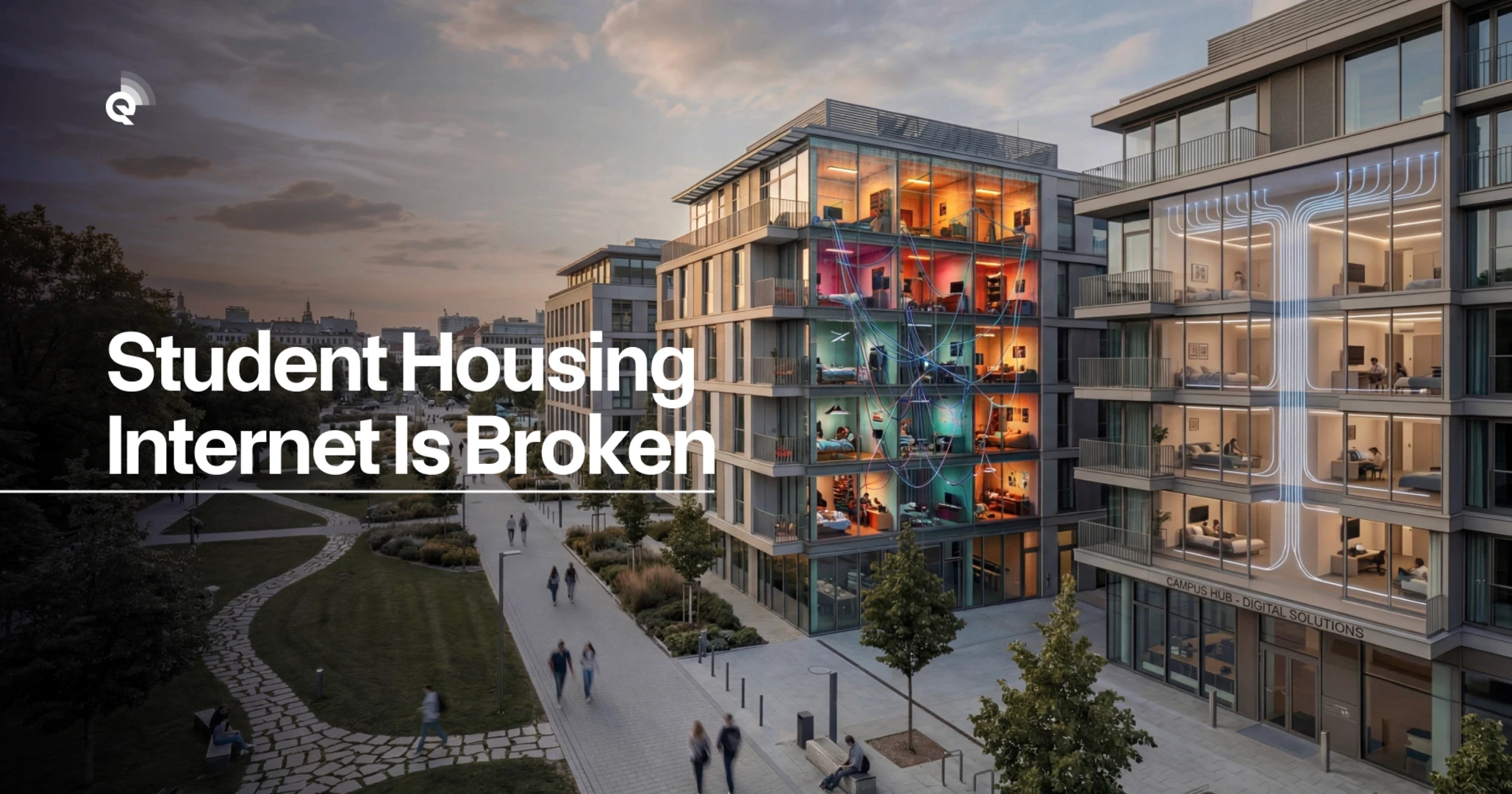
Walk into almost any student housing property in the United States and you will hear the same frustrations repeated across residents and staff. Wi-Fi slows down at night, streaming services buffer during peak hours, online classes freeze unexpectedly, and gaming performance drops when demand is highest. From an operational standpoint, the picture is just as challenging. Support tickets pile up, leasing teams deal with negative reviews, and staff spend time troubleshooting issues they cannot actually control.
This is not a temporary issue that will resolve with minor upgrades. It is a structural problem tied to how internet service is delivered in student housing. The traditional model was never designed for the density, usage patterns, and performance expectations that define modern student communities. As a result, more operators are starting to rethink connectivity as a strategic infrastructure decision rather than a basic utility.
Why Student Housing Pushes Networks to Their Limits
Student housing environments create one of the most demanding connectivity scenarios in real estate. Each unit typically supports a large number of devices, including laptops, smartphones, gaming consoles, smart TVs, and connected home devices, all operating simultaneously. Usage patterns are highly synchronized, with peak demand concentrated in the evenings, weekends, and during exam periods when entire buildings are online at once.
In addition to volume, the type of usage is also more demanding. Students rely on video conferencing, cloud collaboration platforms, streaming services, and low-latency gaming environments. These applications require not only speed, but also stability and consistency. Networks that perform well in traditional multifamily settings often struggle under these conditions, leading to congestion, interruptions, and inconsistent service across the property.
The Core Issue: Retail Internet in a High-Density Property
Most student housing properties still rely on a fragmented retail internet model, where each resident subscribes individually and each unit is treated as a separate connection. While this approach appears simple on the surface, it creates inefficiencies across the entire property. Bandwidth is distributed unevenly, performance becomes unpredictable, and there is no centralized visibility into network health or usage patterns.
Retail cable infrastructure was built for dispersed residential use, not for hundreds of users operating simultaneously within a single building or community. This mismatch leads to congestion, service instability, and a poor overall experience for residents. It also leaves property teams without the tools or control needed to address issues effectively.
Operators exploring alternatives are increasingly turning to managed Wi-Fi for multifamily properties, which replaces fragmented connections with a unified network designed specifically for high-density environments.
The Operational and Financial Impact
Connectivity issues rarely stay isolated within the network. They affect the entire property ecosystem. Leasing teams encounter objections during tours, online reviews reflect negative experiences, and maintenance teams receive repeated tickets that are outside their scope of control. Over time, these issues translate into measurable financial impact through lower resident satisfaction, higher turnover, and increased operational overhead.
At the same time, many properties continue to treat internet service as a fixed cost rather than a strategic asset. This perspective overlooks the potential for connectivity to influence both resident experience and property-level financial performance. When implemented correctly, modern network infrastructure can reduce costs, improve efficiency, and contribute to stronger NOI outcomes.
The Shift Toward Managed Wi-Fi and Bulk Internet
Forward-thinking operators are moving away from fragmented retail internet and adopting a unified infrastructure model built around managed Wi-Fi and bulk internet. Instead of managing hundreds of individual connections, the property operates on a single, engineered network that delivers consistent performance across all units and common areas.
This approach aligns the network with how the property actually functions. It introduces centralized control, predictable performance, and a consistent resident experience. It also enables operators to implement bulk Wi-Fi solutions for HOAs and student housing, which simplify service delivery and reduce operational complexity.
What a Modern Student Housing Network Looks Like
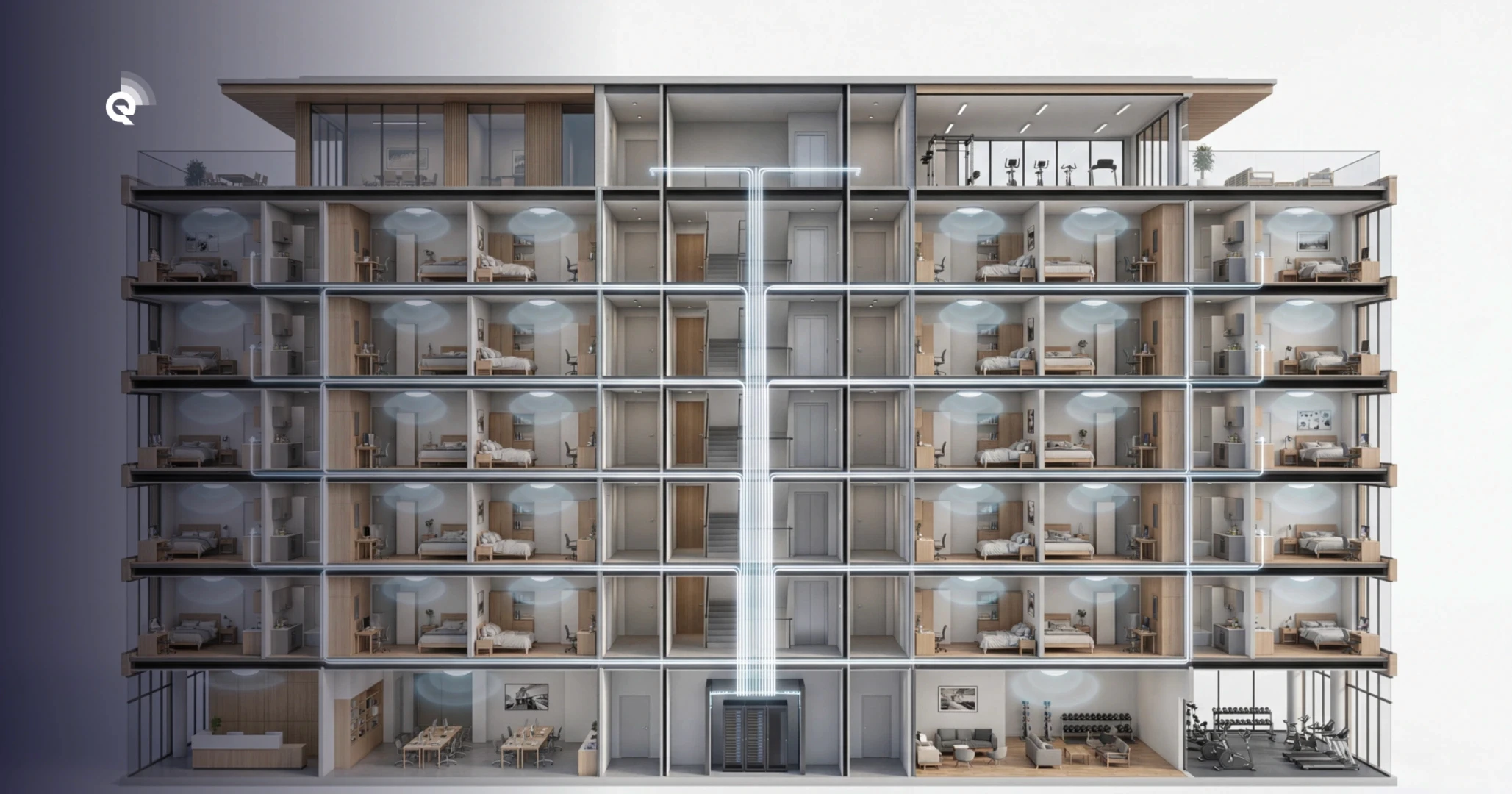
A purpose-built student housing network is designed to handle density, mobility, and performance at scale. Quantum Wi-Fi delivers this through a fully integrated platform that combines fiber infrastructure, managed Wi-Fi, and centralized monitoring. At the foundation, fiber is delivered directly to each unit using advanced architecture that supports symmetrical high-capacity connectivity. This ensures the network can handle both current usage and future demand without requiring major upgrades.
On top of this infrastructure, managed Wi-Fi provides seamless coverage across units, hallways, amenities, and outdoor areas. Residents connect once and remain connected as they move throughout the property. Activation is immediate at move-in, eliminating the need for technician visits or scheduling delays. Behind the scenes, the network is continuously monitored, allowing potential issues to be identified and resolved proactively.
This model represents a complete shift from reactive service delivery to proactive infrastructure management.
Performance That Meets Student Expectations
Students expect connectivity to work without interruption, regardless of how many devices are in use or what applications are running. A properly designed managed Wi-Fi network ensures consistent performance even during peak usage periods, when hundreds of devices may be active at the same time.
There are no data caps or artificial throttling, and performance remains stable across the entire property. Whether residents are attending online classes, streaming high-definition content, or gaming in real time, the network is built to support their needs. This level of reliability reduces complaints and improves overall satisfaction, which directly impacts retention and leasing outcomes.
Reliability That Supports Operations
Reliability is critical in student housing, where connectivity plays a central role in both academic and daily activities. Modern infrastructure addresses this through redundancy, proactive monitoring, and service-level accountability. Networks are designed to avoid single points of failure and are monitored continuously to ensure consistent performance.
This approach transforms connectivity from a recurring operational issue into a stable and predictable component of the property’s infrastructure. Operators no longer need to react to problems after they occur, which reduces workload and improves efficiency across teams.
Turning Connectivity Into a Financial Advantage
One of the most important shifts in the industry is the move from treating internet as a cost to leveraging it as a financial asset. With structured bulk agreements, operators gain predictable pricing and reduce operational overhead. In many cases, connectivity can also contribute to revenue through participation models that align with property performance.
Instead of managing multiple vendors and inconsistent billing structures, properties operate under a unified system that supports long-term planning and financial stability. This is particularly valuable in competitive markets, where operational efficiency and resident experience play a significant role in overall performance.
For operators looking to evaluate this opportunity, the first step is to request a connectivity assessment for your property and understand how current infrastructure compares to modern alternatives.
Seamless Experience From Move-In to Daily Living
The resident experience begins on move-in day, and connectivity plays a key role in shaping first impressions. Traditional models often require residents to schedule installations or deal with setup issues, creating friction during an already busy transition.
A managed network eliminates this process. Residents are connected immediately upon move-in, with no need for service calls or complex setup. This creates a smoother onboarding experience and reduces the burden on property staff. Over time, the benefits extend into daily living, with consistent performance across all areas of the property and fewer interruptions.
Built for Mobility and Modern Usage Patterns
Student behavior is highly mobile. Residents move between their units, study areas, common spaces, and outdoor environments throughout the day. A fragmented network struggles to maintain performance across these transitions, leading to dropped connections and inconsistent service.
Managed Wi-Fi addresses this by enabling seamless roaming across the entire property. Residents remain connected without interruption as they move between spaces. In addition, access extends beyond the property through a global network of Wi-Fi locations, allowing residents to stay connected while traveling or commuting.
Security and Network Control
Security is an increasingly important consideration in high-density residential environments. A centralized network provides stronger protection through segmentation, monitoring, and controlled access. Each unit operates within its own secure environment, preventing cross-access and reducing the risk of vulnerabilities.
Continuous monitoring and automated response systems help detect and address potential threats, ensuring that both resident data and property infrastructure are protected. This level of control is not possible in fragmented retail setups.
A Scalable Model for Growing Portfolios
Many student housing operators manage multiple properties, often across different markets. Consistency becomes critical at this scale. A unified infrastructure model allows operators to standardize connectivity across their portfolio, simplifying management and improving efficiency.
Quantum Wi-Fi is designed to scale alongside portfolio growth, delivering the same performance, reliability, and operational model across all locations. This reduces complexity and supports long-term expansion strategies.
A Better Outcome Across the Board
When connectivity is addressed at the infrastructure level, the benefits extend across every part of the organization. Residents experience reliable, high-performance service. Staff spend less time handling support issues. Leasing teams face fewer objections and stronger reviews. Ownership benefits from improved retention and more predictable financial outcomes.
This is the cumulative impact of moving from a fragmented model to a purpose-built network.
The Path Forward
Student housing continues to evolve, and connectivity expectations are increasing alongside it. Device usage is growing, applications are becoming more demanding, and competition between properties is intensifying. Waiting to upgrade infrastructure only widens the gap between current performance and future expectations.
The decision moving forward is not about incremental improvements. It is about adopting a model that aligns with how student housing actually operates. A purpose-built network provides the foundation for performance, efficiency, and long-term value.
Evaluate Your Current Network
If your property is still relying on retail internet or outdated infrastructure, there is a clear opportunity to improve both resident experience and operational performance. Start by evaluating what your current network is delivering and how it compares to a managed Wi-Fi platform designed for high-density environments.
You can check availability for your property or explore how fiber internet for apartment buildings is transforming student housing communities across the country.
The difference is not incremental. It is foundational.